


A British Icon Steps into Two Wheels
In the UK, Top Gear stands as a cultural institution. Because of that, it ranks among Britain’s most recognisable exports. For this reason, we never expected to feature it here.
Since its relaunch in 2002, the show has reached a global audience. At that point, Clarkson, Hammond, and May reshaped its identity. Over time, documentaries, spin-offs, and magazines followed. As a result, very few people remain unfamiliar with the brand.


A Surprise Project Behind Closed Doors
Over the past year, something unexpected began taking shape. Specifically, a custom motorcycle emerged behind the doors of Top Gear HQ.
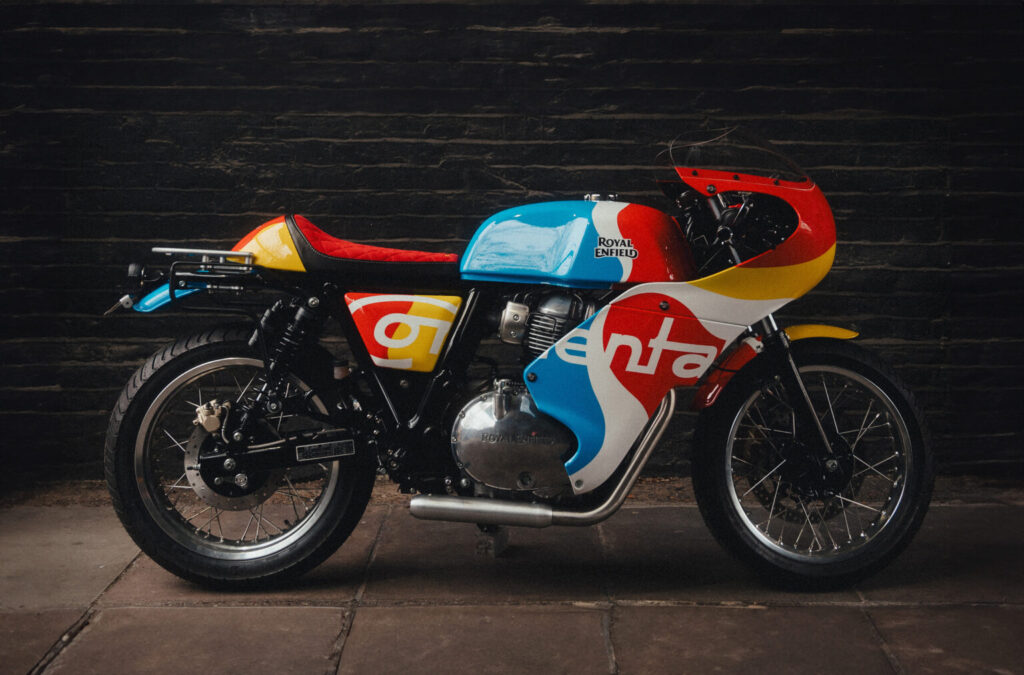
Unlike earlier projects, this one followed a plan. Instead of rushing, the team worked methodically. In doing so, they partnered with respected specialists. Today, we finally reveal Top Gear’s Royal Enfield Continental GT 650.
Learning from the Past
Top Gear has built many wild machines before. Often, those projects focused more on spectacle than precision. In some cases, they looked impractical. In others, they felt deliberately absurd.
Still, creations like the Reliant Robin Rocket became icons. Eventually, museums even displayed them. However, when the team chose two wheels, priorities changed. This time, they called in real experts.
Choosing the Right Base
To begin, Royal Enfield invited the team to its UK Tech Centre at Bruntingthorpe. There, they met experienced designers, including Adrian Sellers. Together, they mapped out a clear direction.
Naturally, the Continental GT 650 stood out. Because of its proportions, it suited a café racer build perfectly. As outlined in the brief, the bike needed sharp styling, premium components, better performance, and a bold paint scheme. Of course, leather luggage also made the list.
Suspension Comes First
Once the concept gained approval online, the project moved quickly. Immediately, the bike headed to Nitron.
Fortunately, the British suspension specialist already knew the platform well. As a result, Nitron fitted fully adjustable NTR R3 rear shocks. At the same time, they upgraded the front with a complete cartridge kit. Together, these changes transformed the bike’s handling.
Wheels Built the Traditional Way
While suspension work continued, another specialist stepped in. Meanwhile, Central Wheel Components began assembling a new wheel set.
Notably, the Birmingham company has built wheels since 1897. Here, Chris, a veteran builder, laced and trued elegant 36-spoke rims. Then, Bridgestone Battlax BT46 tyres wrapped them. As a result, the bike gained both classic style and modern grip.
Harris Performance Sharpens the Package
Next, the GT 650 moved to Harris Performance. There, CNC machines went straight to work.
First, Harris machined billet aluminium triple clamps. By comparison, they weigh less and feel stiffer than stock. Next, the team added adjustable clip-ons and new rearsets. Because of this, riders can fine-tune their position easily.
Finally, Harris fabricated a custom fairing stay. Importantly, rubber mounts prevent vibration and rattles when riding hard..
Bodywork with Racing Roots
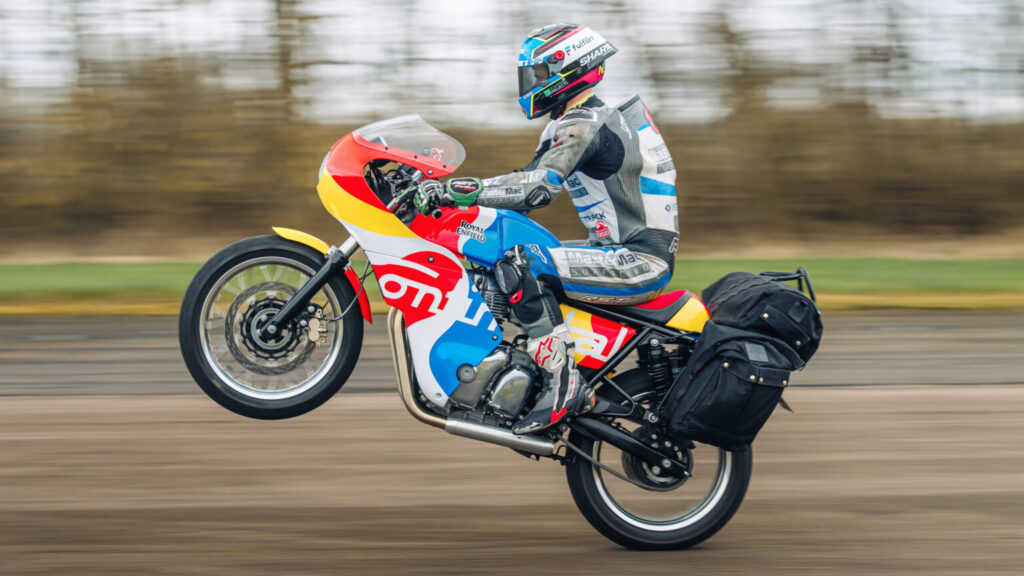
The fibreglass fairing draws inspiration from Harris’ Magnum racer. However, its lower section now suits the modern engine.
At the front, a compact LED headlight sits neatly inside the fairing. Alongside it, a clear screen and matching front fender complete the look.
Cutting Weight Where It Counts
The stock exhaust was never going to stay. Simply put, it added too much weight.
Therefore, BAAK supplied a lightweight exhaust system. In total, the change removed 12.8 kg. Consequently, both performance and appearance improved.
Paint Inspired by Motorsport Art
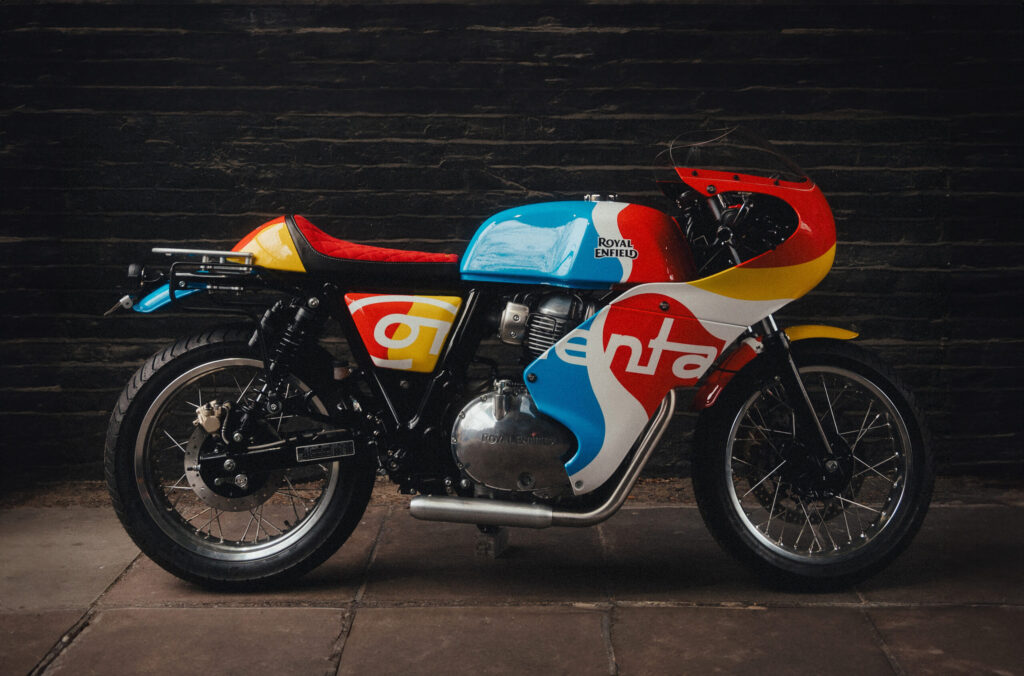
With the hardware complete, attention shifted to paint. At this stage, Royal Enfield’s in-house graphics team took over.
Drawing inspiration from the BMW 3.0 CSL, they referenced Alexander Calder’s Le Mans artwork. Next, designers Darline and Dani applied layered stencils. Finally, painter Pete Wycherley brought the colours to life.
Comfort Meets Craftsmanship
Afterwards, seat specialist Tom Hurley handled the saddle. First, he shaped memory foam and gel. Then, he sealed everything beneath a waterproof layer.
To finish, the seat combined water buffalo leather with Alcantara. As expected, detailed stitching tied it into the bike’s design.
Finishing Touches That Matter
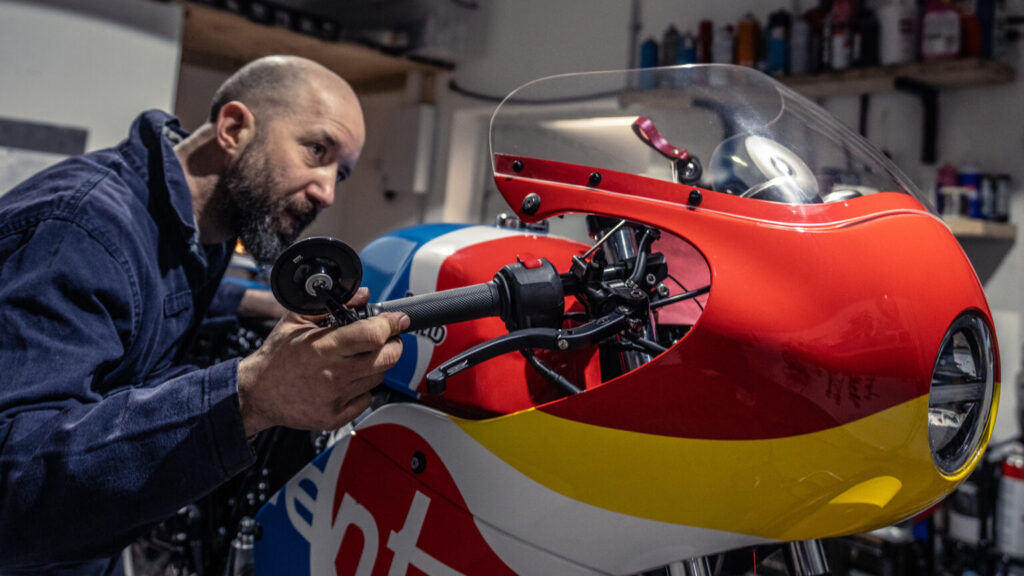
To complete the build, Urban Rider supplied new wiring and controls. At the same time, HEL Performance upgraded the brake lines with braided stainless steel hoses.
Given Top Gear’s travel focus, luggage became essential. For that reason, Fastec Racing teamed up with Malle London. Together, they created bespoke racks and beautifully finished suitcases.

Proven on Track
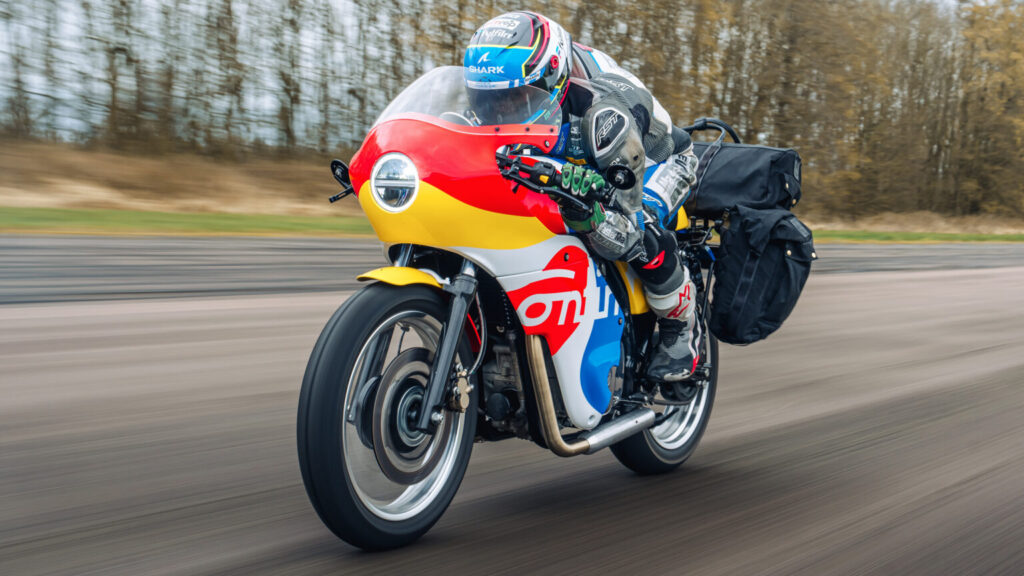
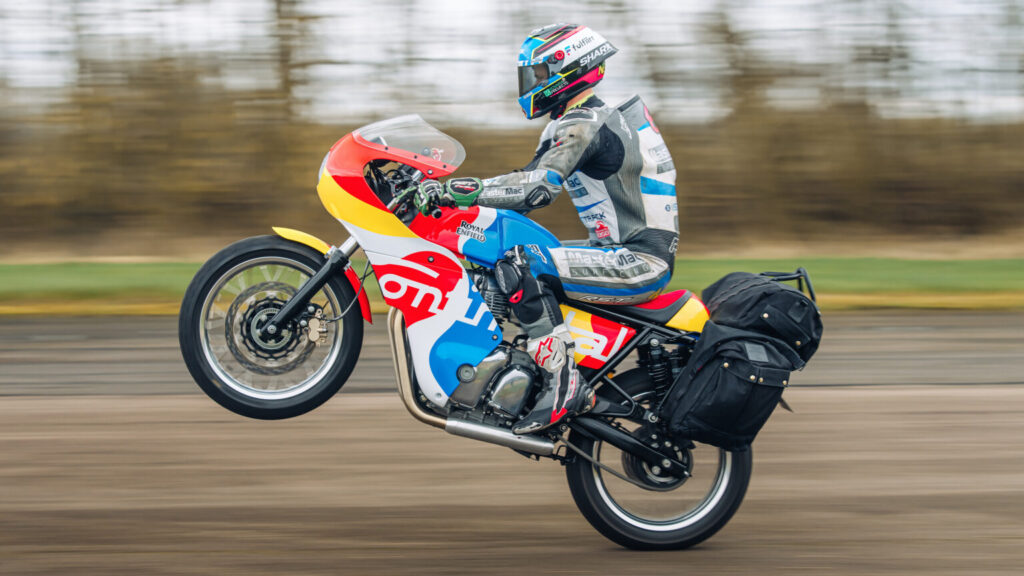
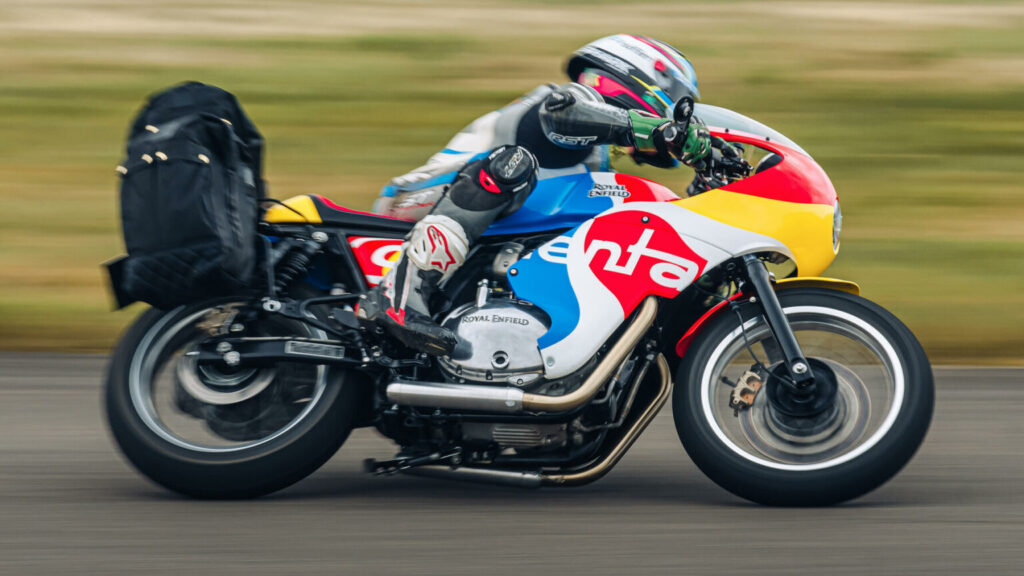
Finally, Top Gear handed the bike to Charlie Nesbitt. As the BSB Rookie of the Year, he rode it hard on track.
During testing, he fine-tuned the suspension. In the end, the results spoke clearly. While it isn’t a supercar, this Royal Enfield proves that, for sensible-car money, a motorcycle can still feel like a star.
[TopGear]