

From screen legend Steve McQueen to MotoGP star Danilo Petrucci, rally racing has always attracted fearless names. Time and again, the desert pulls riders toward speed and danger. In particular, events like the Dakar Rally and the Baja 1000 demand courage. At the same time, they demand machines tough enough to survive brutal punishment.
Fuel Motorcycles and the Rally Spirit
Few teams understand this balance better than Fuel Motorcycles. Based in Barcelona, the workshop also runs the legendary Scram Africa rally. Because of that experience, Fuel understands what real desert racing requires.
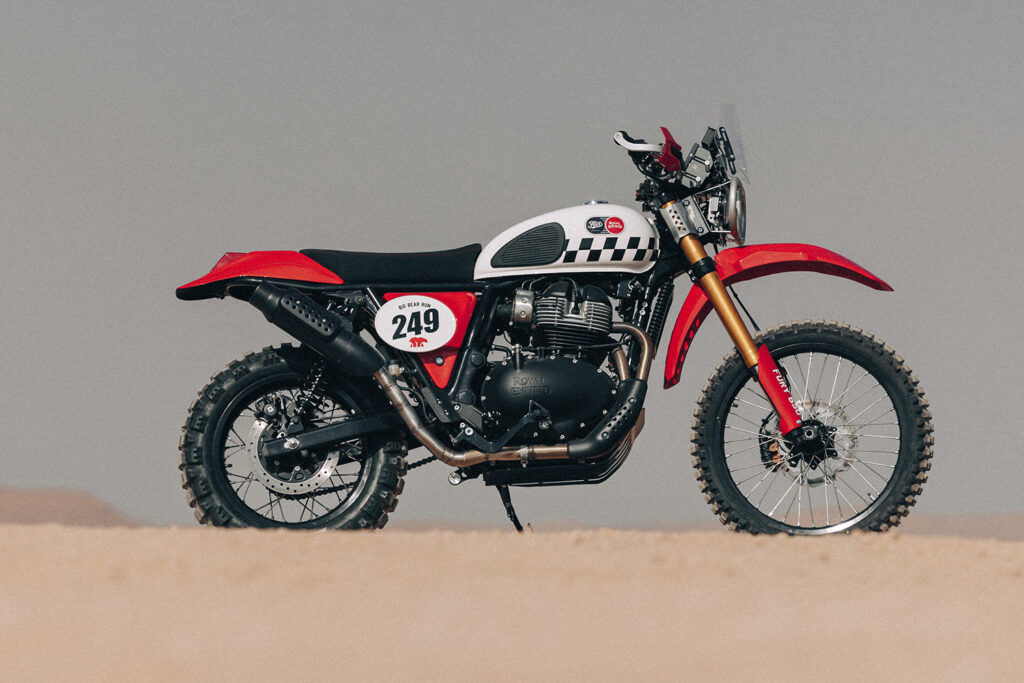
So, when Royal Enfield launched the Bear 650, they turned to Fuel. As a result, the Fuel Fury 650 took shape. From the very beginning, the goal focused on blending rally heritage with modern performance.

The Bear 650 and Its Heritage
Royal Enfield’s 650 twin platform continues to grow. In fact, the Bear 650 plays a major role in that success. Royal Enfield calls it a road scrambler with a sixties soul. Importantly, history supports that claim.
During that era, parallel twins dominated desert racing. Because of this, expectations for the Bear 650 ran high. For Fuel, the project began once Royal Enfield invited them to collaborate on the launch.
Choosing a Modern Rally Direction
A purely classic build felt predictable. However, Fuel wanted more. Instead, the team asked a simple question. What if the bike carried vintage spirit yet raced across modern deserts?
That question, therefore, defined the project. From there, Fuel set out to build a machine ready for Scram Africa. At the same time, the team remained committed to honoring Royal Enfield’s racing past.

Suspension Built for Real Terrain
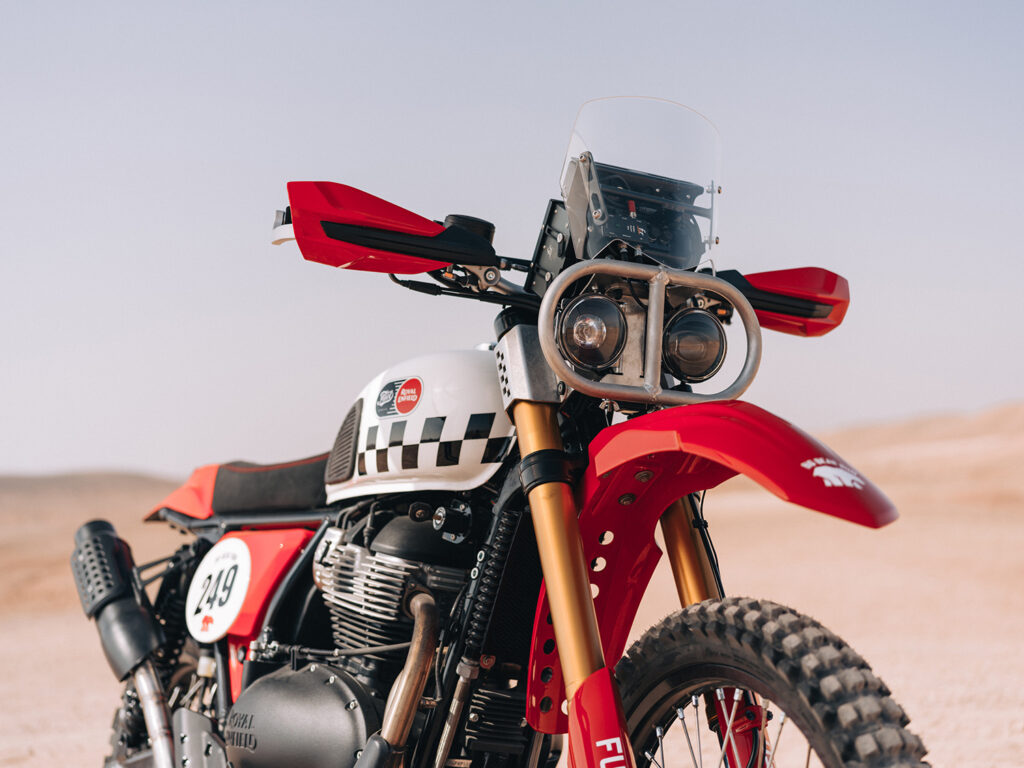
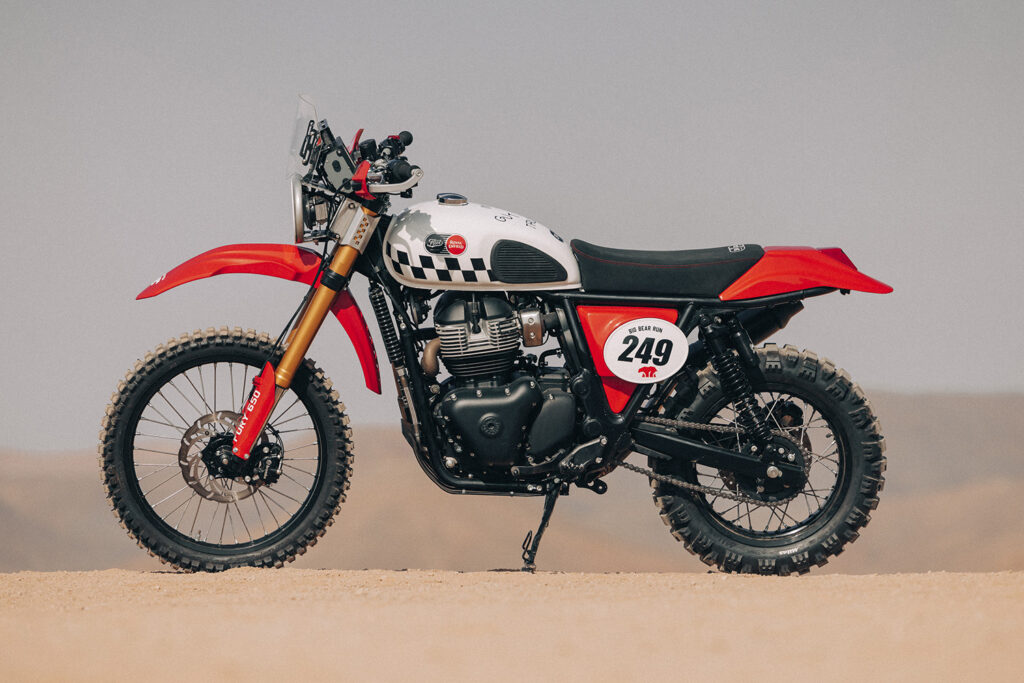
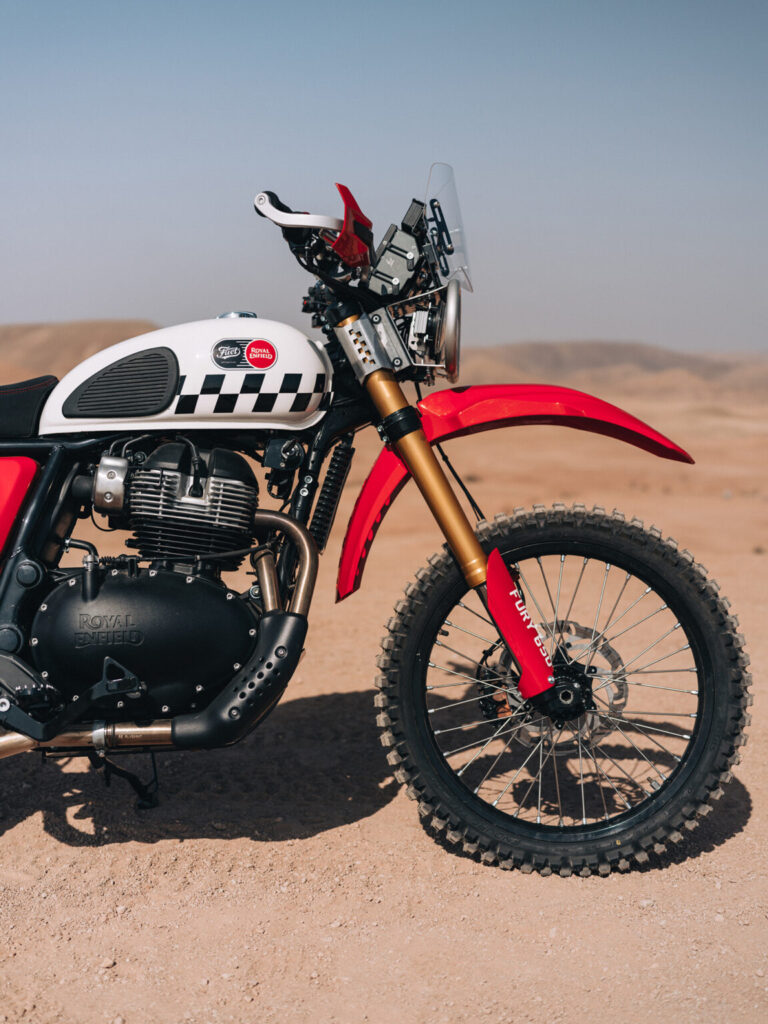
With the vision set, the first upgrade became obvious. After all, desert racing demands serious suspension. So, Fuel replaced the stock front end with large upside-down forks. Then, the team reworked the internals for strength and control.
However, the forks needed proper support. As a result, Fuel added new bearings, a revised steering stem, and custom yokes. Together, these changes allow the front end to absorb heavy impacts.
Wheels, Tyres, and Stability
The factory 19-inch front wheel proved limiting. Instead, Fuel chose a lightweight 21-inch MX wheel. Because of this, the bike gained stability at speed.
Tyre choice mattered just as much. Therefore, the team selected Mitas Enduro Trail XT+ rubber in Dakar specification. At the rear, Bitubo long-travel shocks completed the setup. Consequently, the Fury 650 moved firmly into rally-ready territory.

Shaping the Rally Look
Visually, the transformation begins at the front. Here, a high-mounted front fender and fork guards protect key components. At the rear, Fuel avoided cutting the frame. Instead, the team sculpted the fender in clay first.
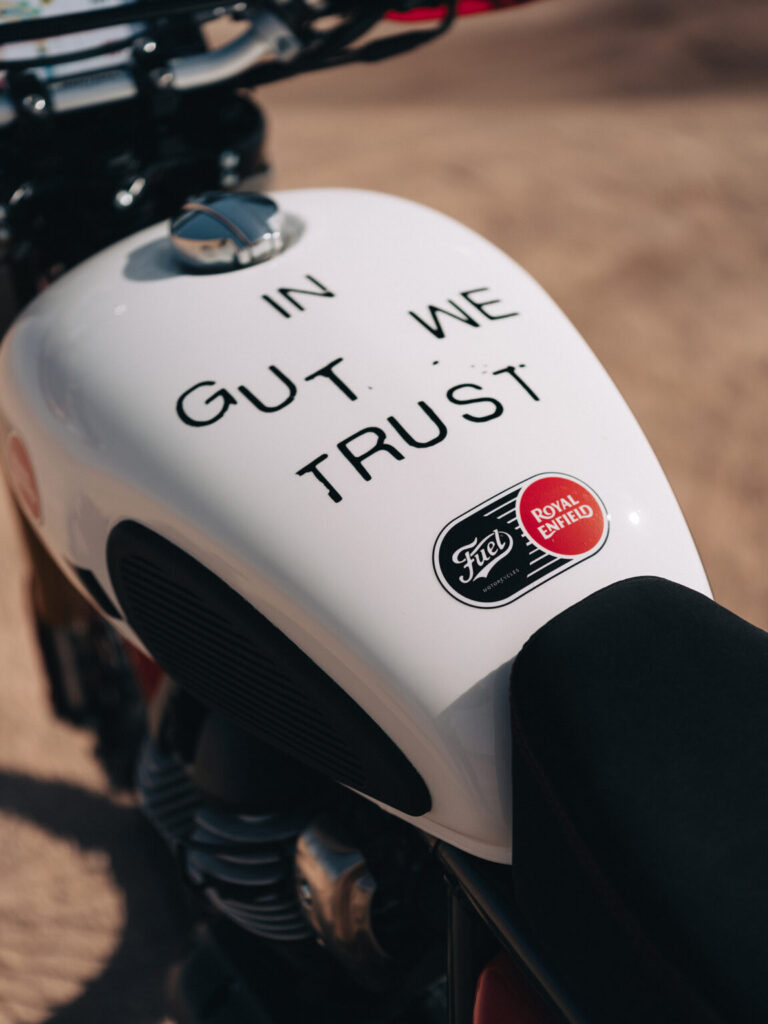
Meanwhile, the stock side covers remain in place. This choice preserves the original silhouette. Likewise, the fuel tank stays untouched. As a result, knee pads improve grip while reinforcing classic scrambler style.
Graphics That Tell a Story
The paintwork connects past and present. Notably, Eddie Mulder’s race number appears proudly. Alongside it, the Big Bear Run logo reinforces heritage. Together, bold red-and-white graphics tell a clear story.
Comfort and Control
Long rides demand comfort. For that reason, Fuel rebuilt the seat with hand-shaped foam. Then, the team wrapped it in waterproof Alcantara. As a result, the seat balances durability and comfort.
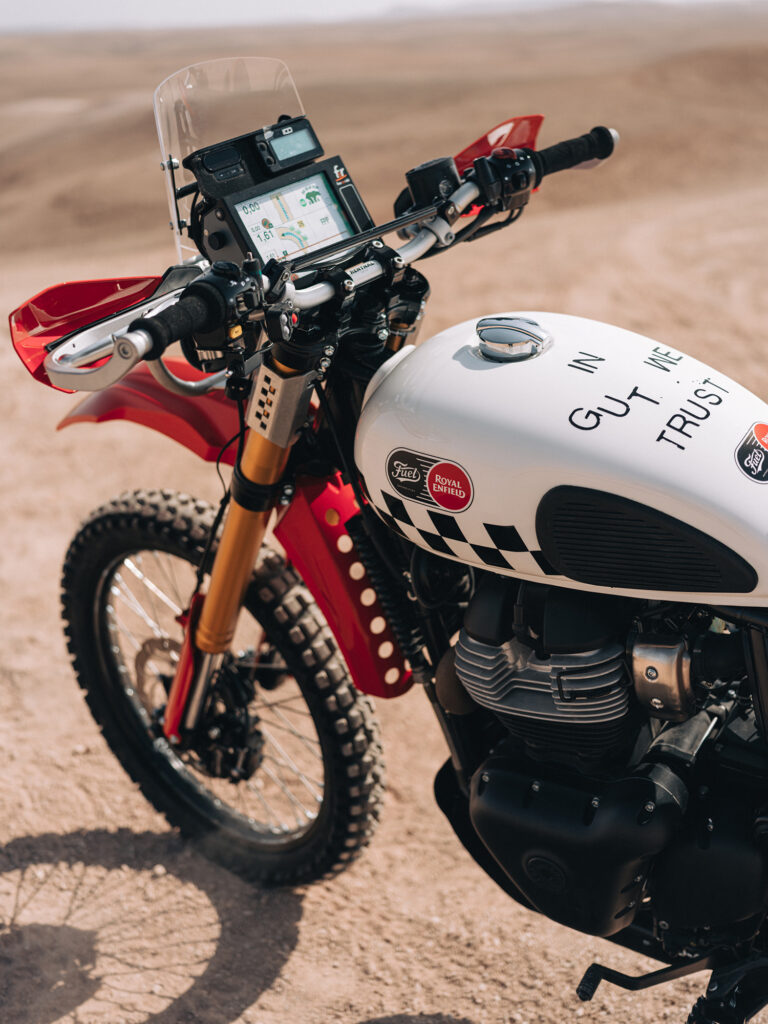
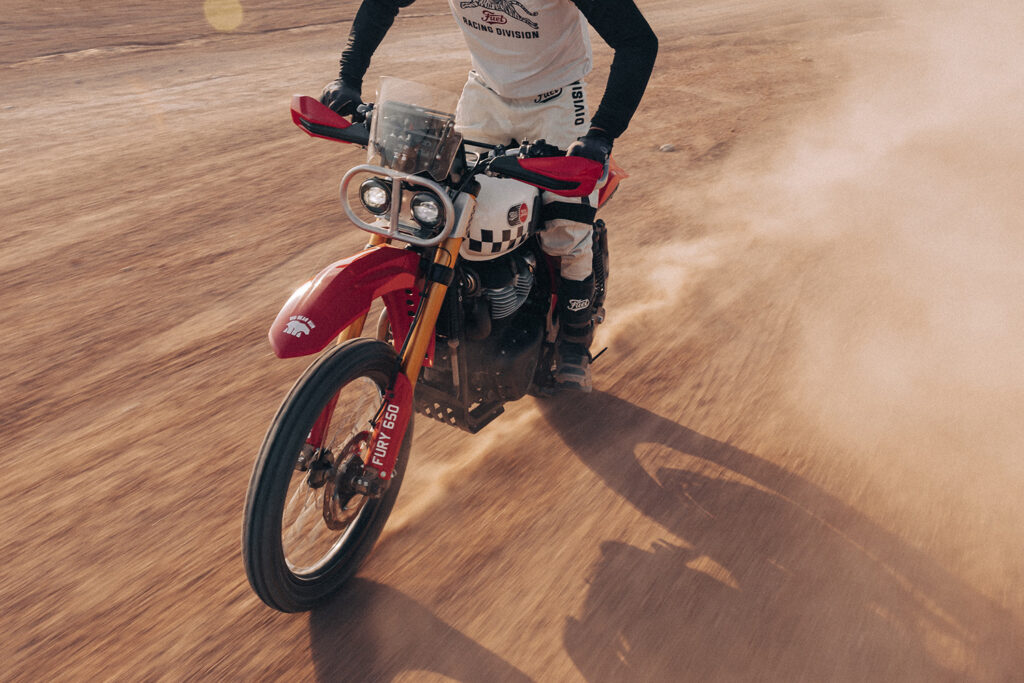
Up front, a massive dual-headlight setup dominates. Because of this, night riding becomes effortless. Finally, custom covers complete the rally-ready look.
Mechanical Restraint, Smart Choices
Mechanically, Fuel chose restraint. Instead of chasing power, the team kept the engine mostly stock. This decision reflects confidence in the platform.
Still, sound mattered. So, Fuel reworked the mid-pipe and collector. In addition, a hand-built muffler adds a deep, classic tone.
Built to Be Used
Every control serves a purpose. For example, wide Renthal handlebars improve leverage. Likewise, bark busters protect the hands. Meanwhile, rally footpegs add stability. At the same time, a heavy-duty skid plate guards the underside.
Fuel simplified the electrics with a Motogadget control unit. Alongside that, a GPS roadbook and rally navigation controls complete the cockpit. As a result, the Fury 650 stands ready for real desert use.
A Rebel with Purpose
Fuel describes the Fury 650 best. Rather than just a motorcycle, it represents freedom and endurance. Ultimately, the build proves that rally spirit still thrives. In doing so, it shows that heritage and modern performance can coexist on the sand.
Photo: Fuel Motorcycles